

Understand your aquarium · 4 min read
Phyllanthus fluitans: growing red root floaters
Light, surface movement and open space: enjoy this floating plant without shading the entire aquarium.
Explore the guideSousleau Journal · Updated 2026-09-24
- Name
- Phyllanthus fluitans
- Origin
- South America
- Position
- At the surface
- Maintenance
- Thin regularly
On this page
A plant to view from above and below
Phyllanthus fluitans is a South American floating plant. Small leaves occupy the surface while roots hang in the water. It can be appreciated from above and through the front glass as light passes through its roots.
The name red root floater describes a popular feature, not a colour guaranteed under every condition. To decide whether it fits your tank, first assess surface space and movement from the filter return.
Three conditions to consider
A suitable surface area
Avoid placing portions beneath a return that continually rolls or submerges them. A calmer area makes establishment easier to monitor.
The light actually received
Lamp distance, a lid and neighbouring plants change conditions. Compare the position with cultivation guidance, not wattage alone.
Space beneath the roots
Plan for livestock movement, feeding and equipment access. This plant adds hanging volume, not just surface decoration.

Prepare and introduce portions
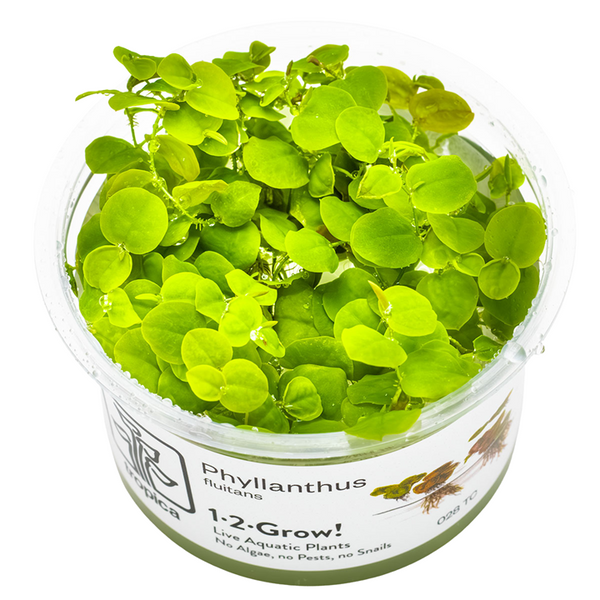
For a cup-grown plant, remove and rinse growing medium according to supplier instructions. Place portions on the surface without planting roots in the substrate. Handle the small stems gently.
Choose an area that is easy to observe during the first days. An aquarium-appropriate surface divider may help maintain open space; check that it cannot trap animals and does not interfere with filtration.
Observe colour instead of forcing it
Colour changes with growing conditions. Green leaves do not automatically mean illness. Do not deliberately deprive an entire aquarium of nutrients to chase a photograph’s hue. First assess growth, leaf condition and compatibility with submerged plants.
Photograph the same area under comparable lighting. This prevents confusing a lamp or phone setting change with a plant response. A healthy group suited to your aquarium remains the best outcome.
Thin before the surface closes
Monitor light reaching plants below and retain openings for observing livestock and feeding. Remove excess portions before they form a tightly packed layer. Work slowly to avoid carrying away shrimp sheltering among the roots.
Never release aquarium plants into streams, ditches or natural waters. Dispose of plant waste appropriately. Keeping a floating plant includes controlling how it leaves the aquarium.

Tropical origins and life at the interface
Tropica describes Phyllanthus fluitans as a South American floating plant. It occupies the interface between air and water: leaves develop at the surface while roots hang into the tank. This position distinguishes it from fully submerged plants even when delivery formats look similar.
View it from more than one angle. From above, assess leaf density; from the side, observe roots, transmitted light and room for inhabitants. A successful aquarium does not need a uniform floating carpet. One group can become a design feature while a substantial area of surface remains open.
Find a calm area without removing circulation
Floating leaves should not be repeatedly pushed underwater by the filter return. If the group constantly spins, piles into a corner or becomes submerged, first review flow direction. Defining a surface zone can help provided it does not obstruct intakes or necessary surface access.
A calm area does not mean an aquarium without filtration or gas exchange. Maintain circulation suited to the tank and livestock. Check splashing and condensation in your setup too. Observe the actual leaves rather than applying an absolute rule to every lid: repeated wetting and the plant’s response should guide adjustments.
Nutrition and colour: prioritize healthy growth
Colour changes with growing conditions. Green leaves alone do not mean illness, and red roots do not prove the entire tank is balanced. Compare new leaf size, group condition and multiplication before deciding fertilization needs changing.
Avoid deliberately causing deficiency to pursue a colour. Other plants and livestock share the water. Choose nutrition for the whole planting and follow the product’s instructions. Floating growth can also intercept light reaching plants below: a change at substrate level may reflect shade rather than a sudden fertilizer shortage.

Thin and remove excess growth carefully
During maintenance, gently separate groups to check for tightly stacked layers. Remove some excess and retain healthy portions rather than allowing older leaves to disappear beneath new growth. Check roots caught around equipment and areas needed for feeding at the same time.
Removed floating plants can carry small animals. Inspect them over a container before disposal. Never release aquarium plants into streams, ponds or drainage ditches. Use disposal appropriate to your locality. This simple routine preserves open surface, limits excessive shade and creates a regular opportunity to observe the whole tank.
Frequently asked questions
Does this floater need injected CO₂?
Surface leaves have access to air. Decide on injection according to submerged plants and the whole project.
Why are the roots not very red?
Colour depends on conditions; redness alone does not measure health.
Can it cover the surface?
It can spread. Thin it to preserve access and light for the rest of the tank.