
NilocG · Thrive
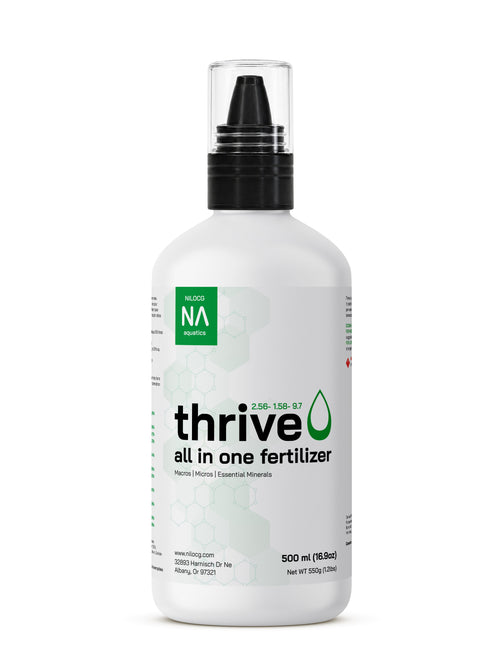
Compare Thrive formulas
Understand what changes from one formula to the next: intended use, nutrient concentration and application.
Explore the Thrive collection →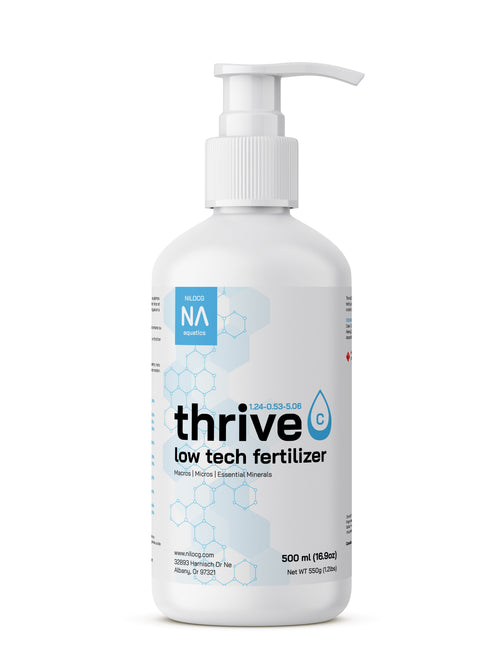
Thrive C
Lower-tech · moderate demand
For planted aquariums with moderate nutrient demand.
Explore this formula →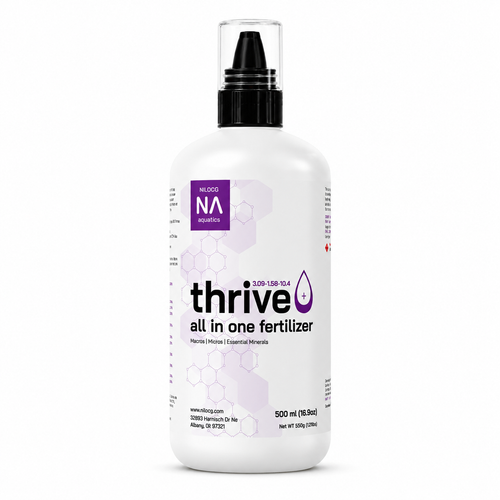
Thrive+
High demand · CO₂ · pH below 7
Nutrition for actively growing, demanding planted tanks.
Explore this formula →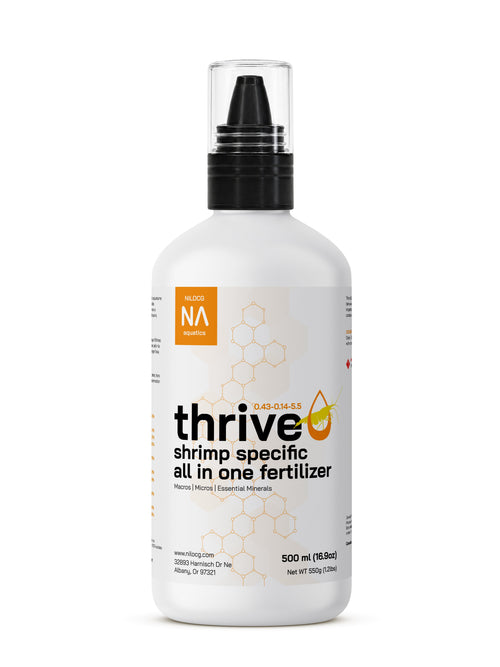
Thrive Shrimp
Planted shrimp aquariums
Plant nutrition designed around a shrimp aquarium.
Explore this formula →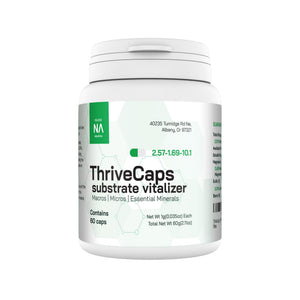
Thrive Caps
Root nutrition complements water-column feeding when needed. It does not replace liquid feeding for epiphytes or floating plants.
Explore this formula →The differences, at a glance.
Compare the intended use first. A higher percentage is not automatically a better fit, and a fertilizer does not supply pressurized CO₂.
| Formula | Thrive OG | Thrive C | Thrive+ | Thrive Shrimp |
|---|---|---|---|---|
| Designed for | Varied planted aquariums | Lower-tech · moderate demand | High demand · CO₂ · pH below 7 | Planted shrimp aquariums |
| Total nitrogen (N) | 2.56 % | 1.24 % | 3.09 % | 0.43 % |
| Available phosphate (P₂O₅) | 1.58 % | 0.53 % | 1.58 % | 0.14 % |
| Soluble potash (K₂O) | 9.7 % | 5.06 % | 10.4 % | 5.5 % |
| Manufacturer’s starting rhythm | 1–2 times weekly in lower light; 3 in high light. | 1–2 times per week, adjusted to demand. | 3 times weekly in high light; 1–2 in lower light. | 1–3 times per week, adjusted to plant demand. |
Percentages describe the fertilizer, not a target concentration in your aquarium. Phosphorus and potassium are declared as P₂O₅ and K₂O.