
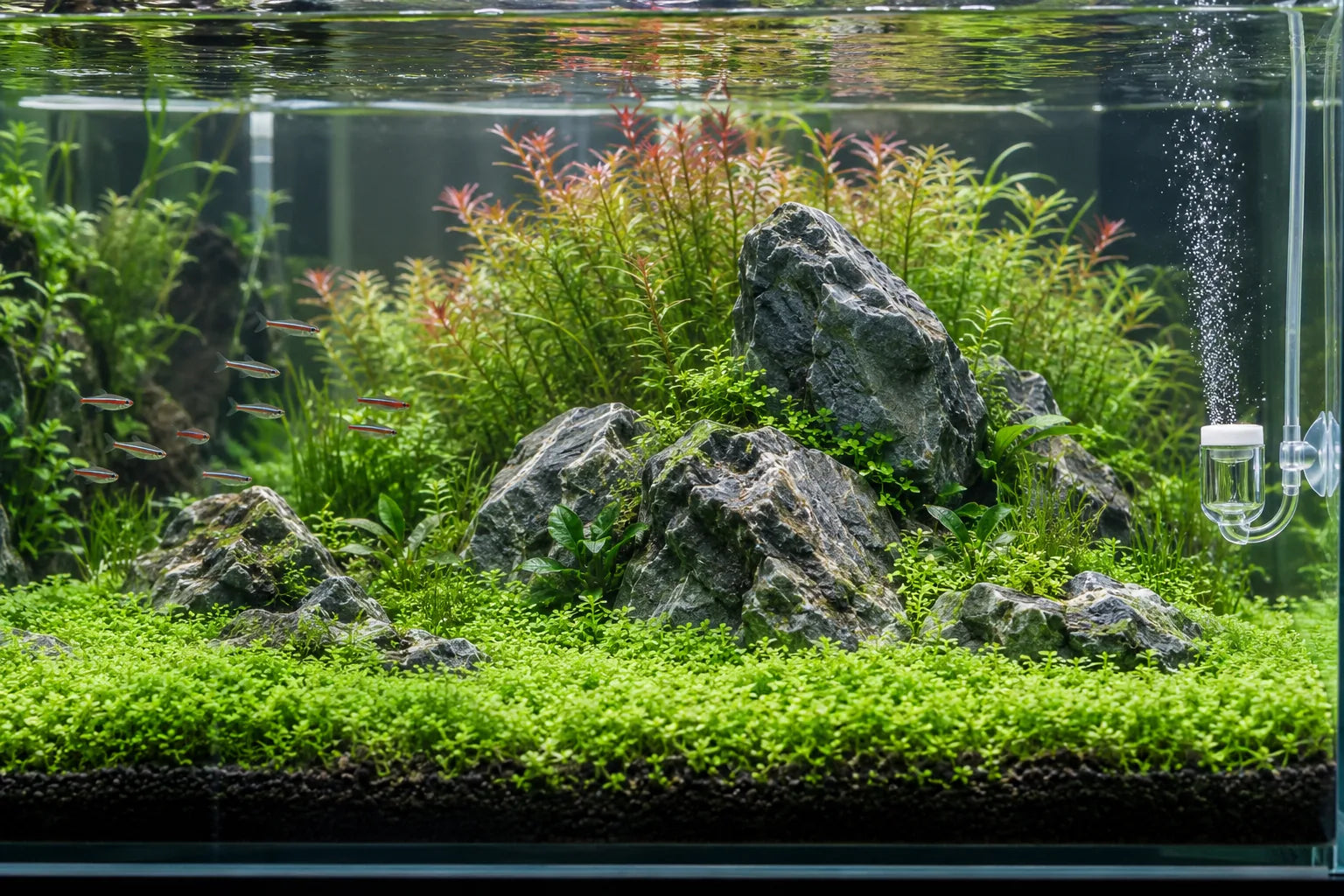

Photos of this Tropica reference. Appearance may change after immersion.
Tropica
Najas guadalupensis 'Guppy Grass'
Najas guadalupensis 'Guppy Grass' · Botanical family: Hydrocharitaceae
Free-growing shelter for fry.
Floating Growth
Not specified for this reference
1 cup · In-vitro
Your cart has more in store.
after adding this item
One gift per order. Campaign conditions apply. Orders with plants: free shipping from $199.99 in the main zone, or $399.99 to Newfoundland and Labrador, Prince Edward Island and Northwest Territories. No plants: Canada Post rates.
Floating
Picture its place. Understand its size.
Najas guadalupensis, or Guppy Grass, forms fine, fast-growing vegetation. It is often left free in the water, where branching shelters fry and shrimp. It may also develop long roots and anchor in the substrate.
Tropica guide after roughly two months. “+” means the plant may exceed this height; it is not an adult maximum.
 The supplied cup · In-vitro
What it needs. And why.
Light
Not specified for this referenceNot specified for this reference
CO₂
Not specified for this referenceFollow the guidance for this floating plant; surface leaves have access to air. Injection does not replace light or nutrition.
Nutrition
Nutrients are taken from the water. Monitor growth and thin the surface to maintain balance with submerged plants.
All parameters and their sources
- Botanical family
- Hydrocharitaceae
- Listed origin
- Not specified for this reference
Temperature, pH and hardness: this Tropica reference does not publish numerical ranges.
Needs and numerical guides come from the cited Tropica reference. Placement and layout advice are suggestions from Sousleau. Missing values are not inferred from a different species.
Read this plant’s Tropica profile ↗Tropica · 146 TC
From the cup to your layout.
A few steps suited to this plant for a good start.
1Rinse off the growing medium
Gently remove the plant from its cup and rinse off the culture gel before placement.
2Divide gently
Prepare small healthy portions without crushing leaves, stems or roots.
3Let it float
Place portions freely in the water, at the surface for surface-floating plants. Do not bury them.
Pruning and ongoing care
Regularly remove excess growth to preserve open spaces and avoid shading shorter plants.
Understanding acclimatisation
An In-vitro cup contains young plants. Shape, colour and size can change after immersion. Watch new growth, remove deteriorating parts and keep conditions stable. Report plants damaged on arrival; acclimatisation does not explain every problem.